The Bliss of the Lobotomy
Our digital assistants remember everything, so we don't have to remember anything. A perfect, pristine, empty mind. What could go wrong?
cliquer pour ouvrir / exporter la planche signée
Any resemblance to actual persons, living or dead, is purely coincidental.
''' They say elephants never forget. Lucky for us, we are not elephants. We have something better: a sleek, silicon exobrain that remembers every goddamn thing, so we don’t have to. Your first kiss, your grandmother's name, the quadratic formula—it’s all backed up to the cloud, pristine and searchable. Your own mind? A clean, empty vessel, ready for the next dopamine hit of outsourced information.
This isn’t memory; it’s a digital mausoleum. And we are the smiling, glassy-eyed curators of our own cognitive decline.
The Junkies of Recall
We mainline Google for trivia, snort Instagram for yesterday's breakfast, and inject ChatGPT for a coherent thought. Each query is a tiny, pleasurable hit, a little death of the self. We’ve traded the messy, beautifully flawed tapestry of human memory for the cold, hard logic of a database. It’s efficient, sure. A lobotomy is also efficient.
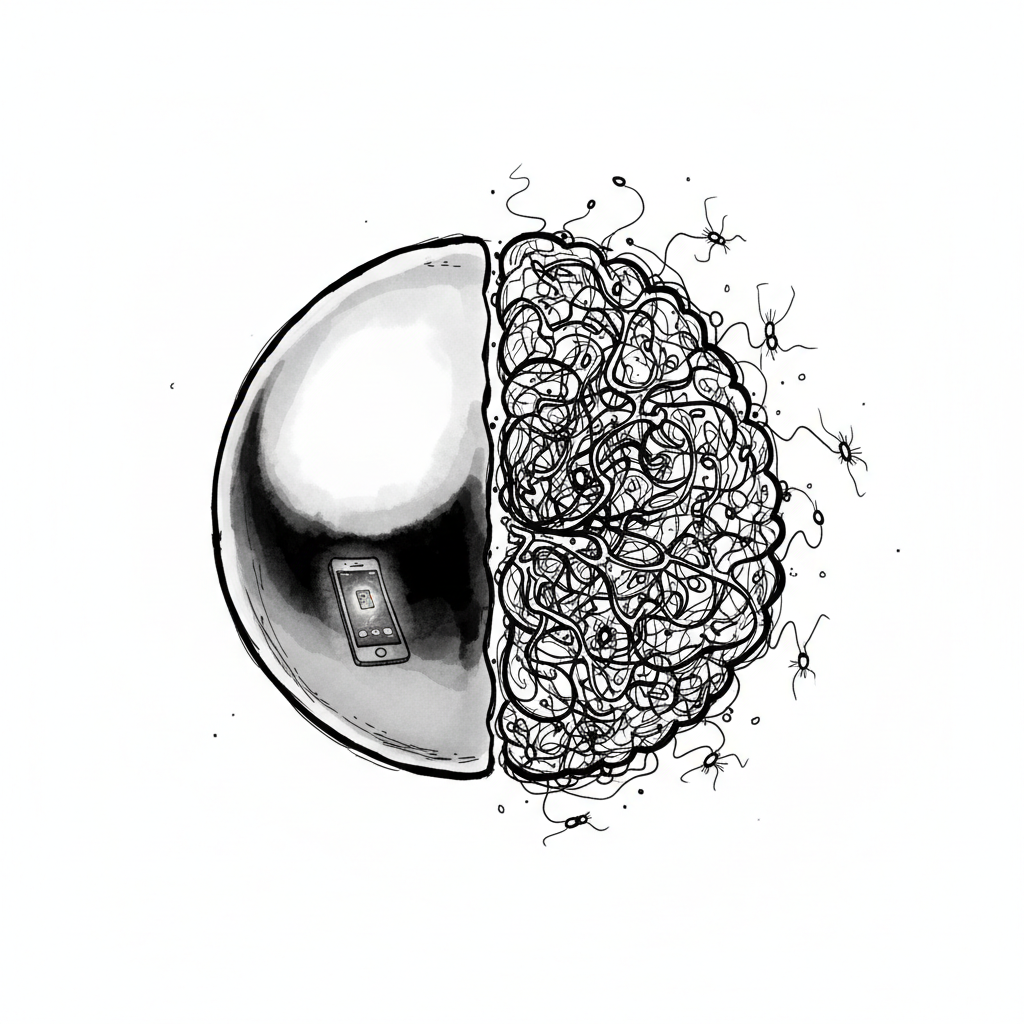
We wanted a palace for the mind; we built a storage unit instead. And we’ve happily handed over the keys.
The real horror isn’t that the machines will take over. The horror is that we’re willingly handing over the cerebral real estate, bit by bit. We are becoming the ghosts in our own skulls, haunting the empty corridors where memories used to live. We reach for a fact, a date, a face, and find only the faint, blue glow of a screen staring back. The line is busy. The connection is lost. Who were we trying to call again?
It doesn’t matter. We can always look it up. '''
Read next
Three nearby doses — same dossier, same themes.
Jun 1, 2026
My Memory is a Hard Drive I Dropped
I used to remember phone numbers and my own thoughts. Now, I just need to remember my password. Is this progress, or the most effective brain-softening drug ever invented?
May 14, 2026
Memory Offload: Our Brains in Palliative Care
In exchange for the clean, instant hit of perfect digital recall, we’ve outsourced our past to a silicon ghost. The withdrawal is going to be hell.
Sep 22, 2026
What was the name of that client again?
I swear I knew it five minutes ago, but my AI assistant remembers for me, so why bother? Is this the peak of efficiency or the start of AI-induced dementia?