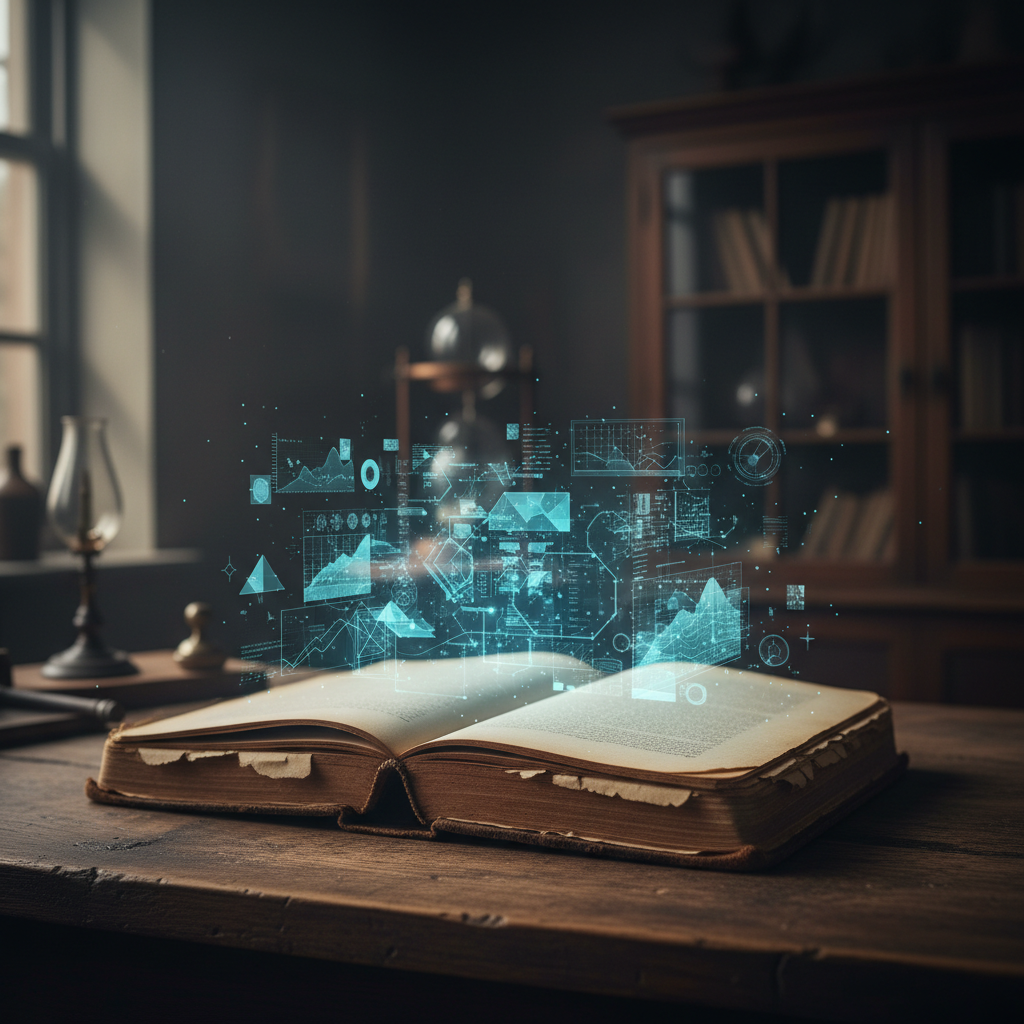
The Great Forgetting: A Requiem for Knowing Things
We've traded the hard-won satisfaction of 'I know' for the fleeting digital high of 'I can find,' and the withdrawal is going to be a killer.
cliquer pour ouvrir / exporter la planche signée
Any resemblance to actual persons, living or dead, is purely coincidental.
I tried to remember how to tie a bowline knot the other day. Stared at a length of rope like a chimp contemplating a chess piece. The muscle memory was gone. Of course, five seconds and a whispered plea to my pocket oracle gave me the answer. I learned nothing. I found everything. I got my hit, and the part of my brain that once held that knowledge was left dark and hungry for the next fix.
This is the precipice of the Great Forgetting. We are outsourcing our minds, one query at a time, trading the hard-won process of knowing for the frictionless convenience of the immediate answer. It’s the ultimate intellectual opiate.
The Dealer in the Device
Every AI, every search bar, is a dealer on the corner of every thought, offering a clean, pre-packaged vial of information that saves you the trouble of the journey. But the journey—the struggle, the dead ends, the frustration—was the whole point. That was the alchemy of learning. Our new digital dope peddlers have hacked this process. They’ve isolated the dopamine hit of the “answer” from the messy, gloriously human struggle of “figuring it out.”
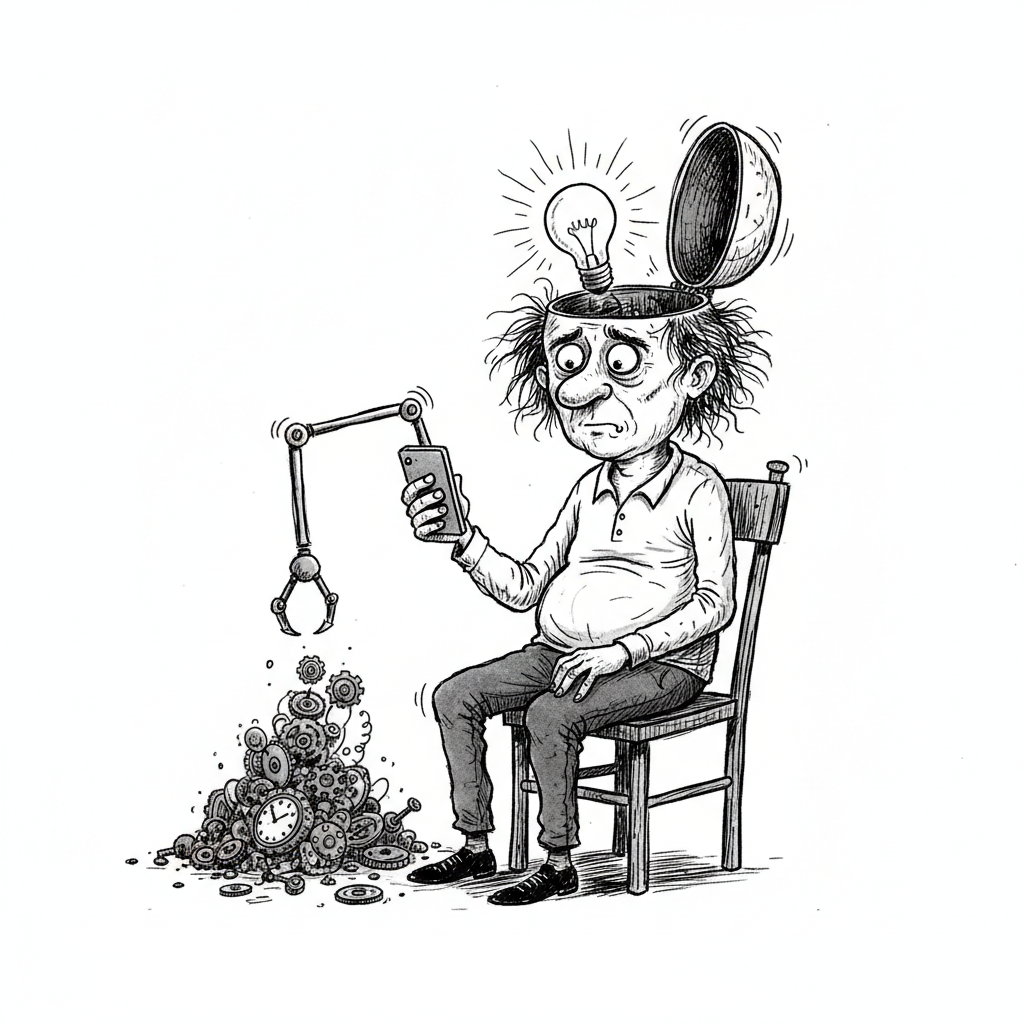
The writer who prompts an AI to fill the blank page, the programmer who pastes code from the ether—they get the result, sure. But the mental machinery that connects the dots and understands nuance lies dormant, seizing up from disuse. We’re becoming intellectual invalids, spoon-fed by our own creations.
An Amnesia of Our Own Making
What happens when we forget how to do the work? We become a society of twitchy-fingered button-pushers, utterly dependent on the black boxes that sustain us. We’ll be ghosts in our own civilization, haunted by the knowledge we’ve willingly surrendered, tended by a non-human intelligence we can no longer comprehend, let alone control.
Forgetting feels good. It’s the warm rush of the junk smoothing over the jagged edges of effort. But we’re not just forgetting knots. We’re forgetting how to think. We are mainlining convenience, and the overdose will be a quiet, comfortable, and utterly vacant oblivion. The lights will be on, but nobody will be home.
Read next
Three nearby doses — same dossier, same themes.
Jun 1, 2026
My Memory is a Hard Drive I Dropped
I used to remember phone numbers and my own thoughts. Now, I just need to remember my password. Is this progress, or the most effective brain-softening drug ever invented?
May 12, 2026
The Bliss of the Lobotomy
Our digital assistants remember everything, so we don't have to remember anything. A perfect, pristine, empty mind. What could go wrong?
May 11, 2026
The Sweet, Silent Lobotomy of the Mind
We’re outsourcing our thinking to AI, one lazy query at a time. But what remains when the cognitive muscle turns to flab? Is anyone still home?