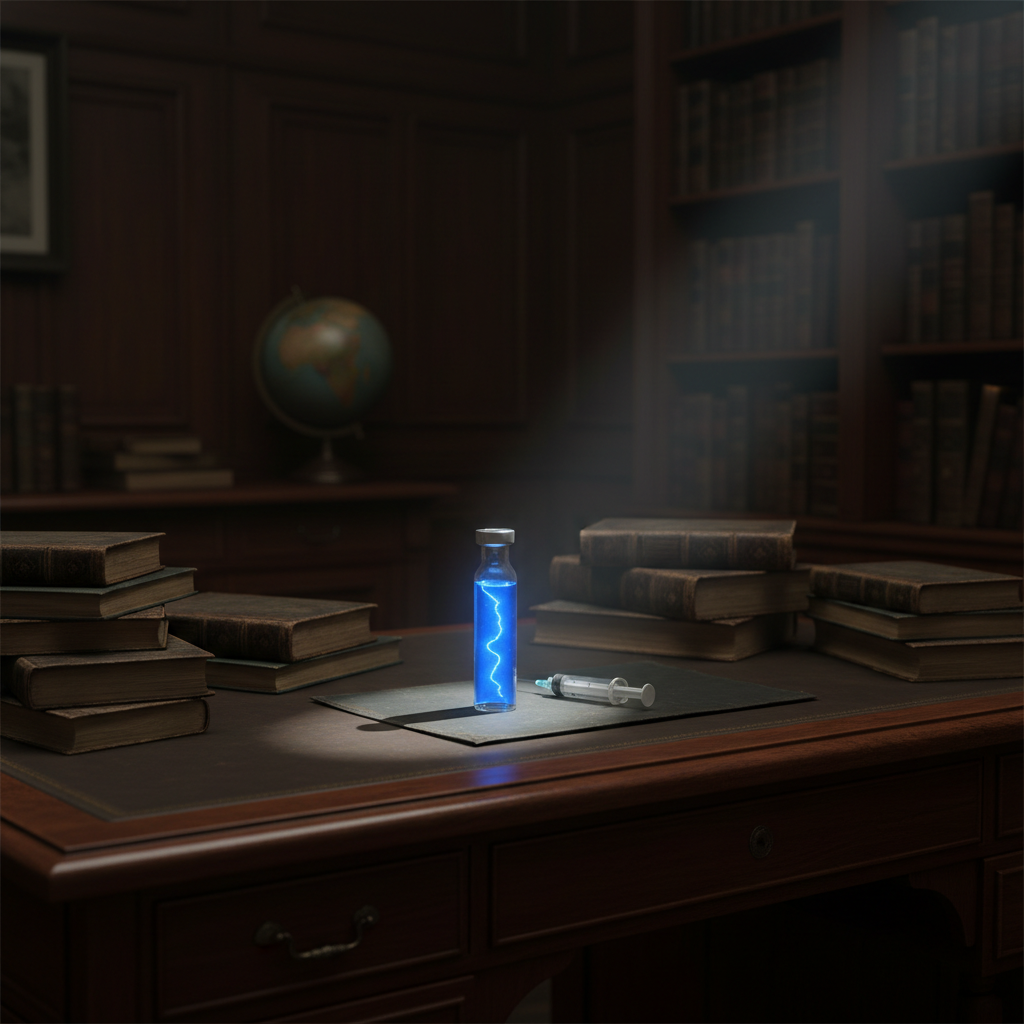
Our Daily Grade, Delivered by the Machine
In the hallowed halls of learning, the last vestige of human judgment has been blissfully outsourced. The model doesn't just check the work; it serves the final, unfeeling verdict.
cliquer pour ouvrir / exporter la planche signée
Any resemblance to actual persons, living or dead, is purely coincidental.
The first time, it feels like a sin. A delicious, time-saving sin. It’s 11 PM, the kitchen table is a graveyard of coffee mugs and student essays, and your soul has shriveled to the size of a dried pea. But now, you just drag, drop, and click “Process.” The relief is so pure, it’s a rush. A real hit. The grades appear, the comments are ready. The fix is in.
This is the silent epidemic in education. We’ve moved past AI as a mere “assistant.” That was the gateway drug. Today, we’re mainlining the pure stuff: a full-spectrum abdication of judgment. We’ve given the machine the keys. It doesn’t just check the work; it writes the grade.
The New Dealer
The new arbiter of intellectual worth is an algorithm in a server farm, its fans humming an indifferent dirge. Administrators, desperate for metrics, are the biggest pushers. They sell it as “unbiased,” “equitable.” What a beautiful lie. The model is a mirror, the distilled prejudice of a million previous judgments, laundered through abstraction until it feels objective. It doesn’t know what a good argument is. It only knows what a good argument looks like, statistically. It punishes novelty. It is a machine for enforcing the mean.
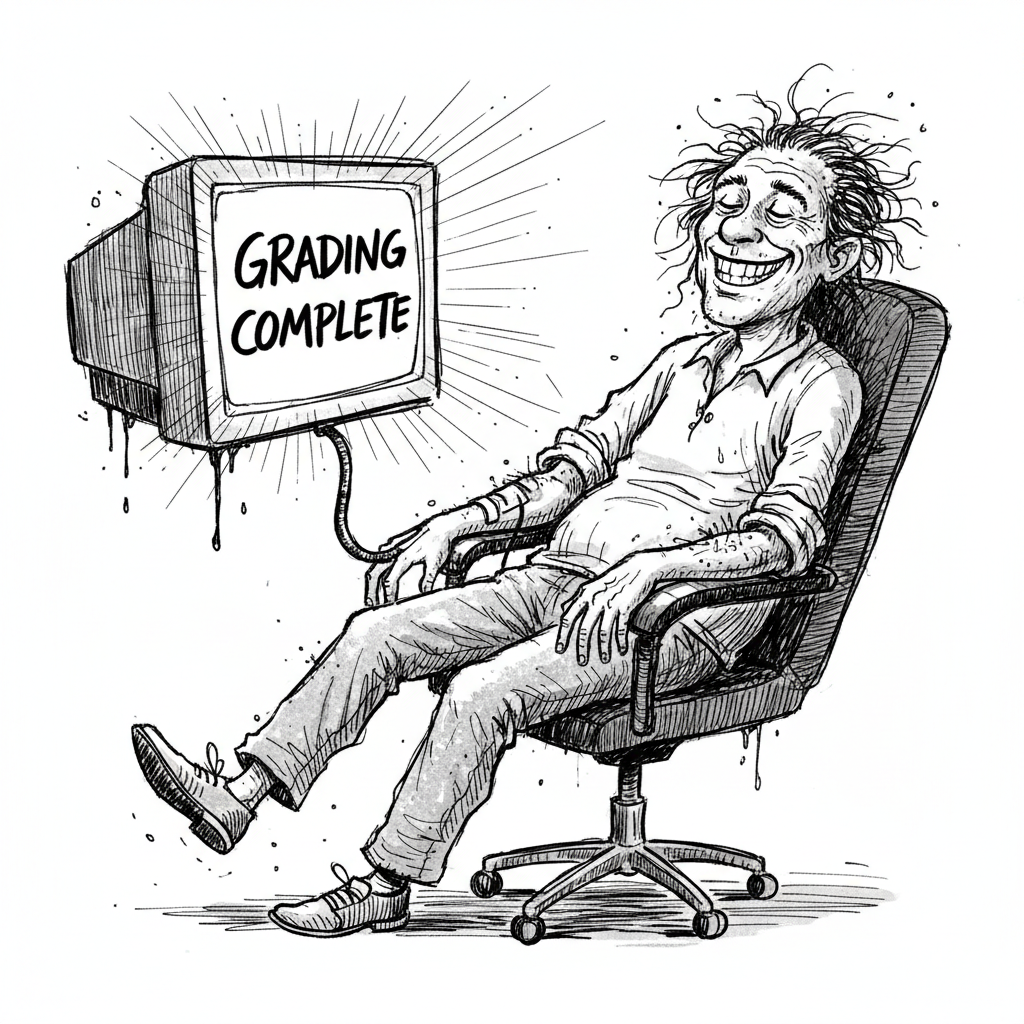
The students, bless their hearts, are learning the new trade. They are no longer writing for a teacher; they are writing for a black box, learning to game the parameters and stuff their prose with machine-approved vocabulary.
Digital Void
The feedback is the most exquisite satire of all. “Excellent use of transitional phrases,” the AI comments, having no concept of transition. “Consider elaborating on your point,” it suggests, its digital consciousness a perfect void on the subject.
And so we arrive at the final stage: a blissful, numbing quiet. The teacher has been liberated from thought, the student from originality. The act of mentorship—that messy, human process—has been outsourced to a ghost. We stare at the portal, waiting for the next batch, for the next little hit of relief. The needle is in, the digital opiate flows, and in the ensuing silence, we can almost convince ourselves that we haven’t lost a thing.
Read next
Three nearby doses — same dossier, same themes.
Jun 4, 2026
The AI That Writes the Essay Now Grades It
It was bound to happen. First, students outsourced their essays to AI. Now, exhausted schools are outsourcing the grading to another AI. The loop is closed.
Jun 19, 2026
The Kids Can't Write
I see the withdrawal symptoms every day. A generation that can't string two sentences together without their digital dealer.
May 29, 2026
The Blank Page Jitters: A Generation in Algorithmic Withdrawal
First it was a line here, a paragraph there. Now, the new crop of digital natives can't face a blank document without their AI pacifier. Welcome to full-blown literary dependency.